


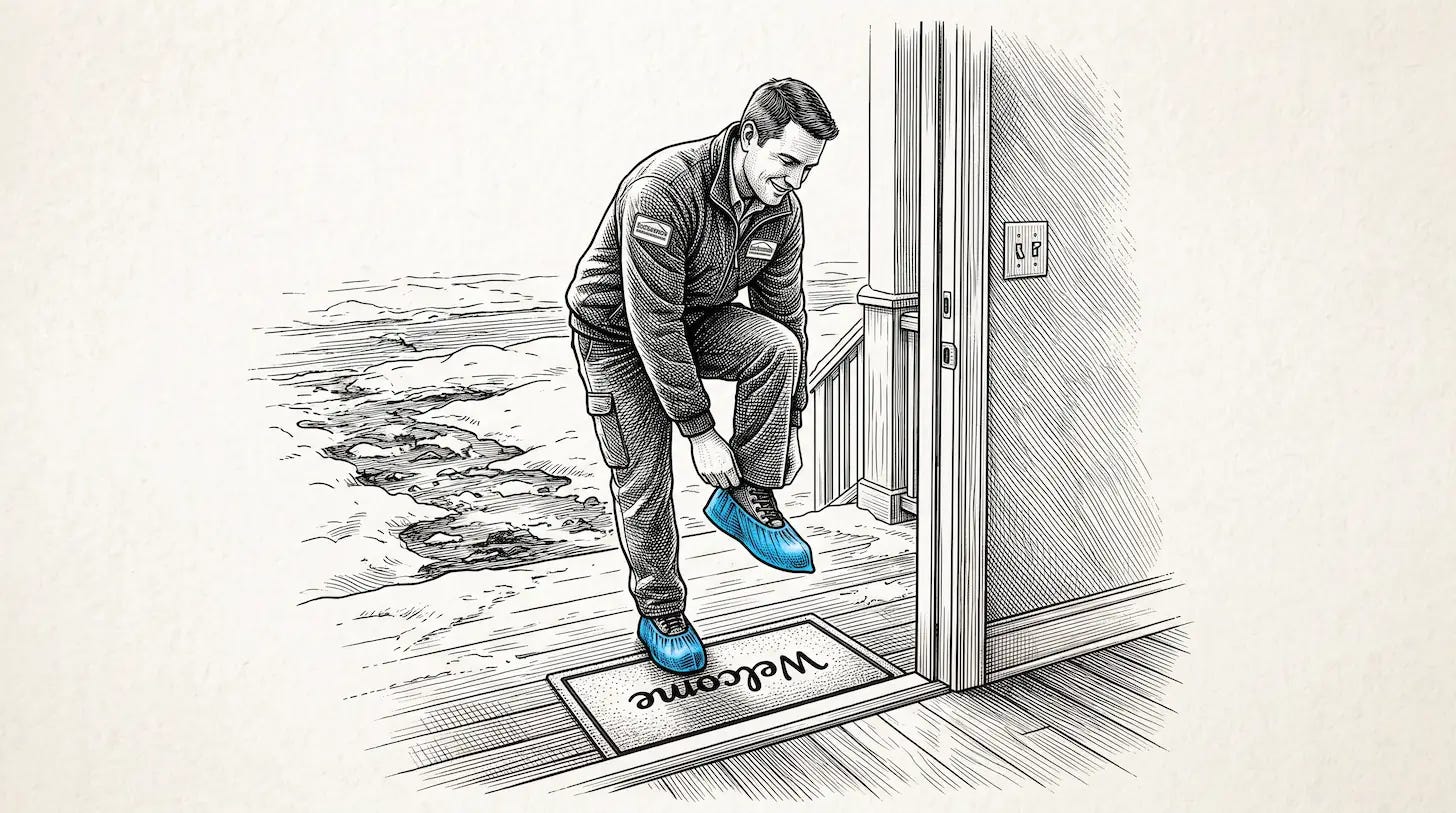
KickStart: Implement systems to pre-anticipate and then reassure homeowners about their nasty weather concerns.
Hot news! (NOT!)🙄 Winter is just around the corner! “DUH, Steve! We know this!” OK, OK! Settle down, folks! 🙏🏼
If you’re in the HVAC game, a cold snap means the phone rings off the hook. For others like pest control, things might slow down. And if you’re in lawn care or landscaping? Pray for lots of snow to plow! 🫣
But whether winter brings your high season or your slow season, it always brings mud, snow, salt, and just general “yuck” that can scare away homeowners.
The result if you keep operating exactly like you do in mid-July? Pissed off residential customers! 😡
When a homeowner sees your service van pull into their snowy driveway, they aren’t just thinking about their broken furnace or leaky pipe. They’re looking at the slush in their driveway while having a mild panic attack about what sloppy work boots will do to their hardwood floors! 😮
Your residential services company needs to reassure and then prove to the homeowner that your techs won’t bring Mr. Winter inside with them!
Establishing clear home service winter protocols isn’t just about cleanliness. Instead, you are consistently creating Moments of Truth that convert stressed homeowners into raving cheerleaders for your business!
Put on Your “Customer’s Eyeglasses”
At HFS, we constantly remind our clients to put on their “Customer’s Eyeglasses.” In other words, to look at themselves, their company and each job through the eyes of their homeowner client.
To win residential customers over, you and your employees must demonstrate respect for clients’ homes through both actions and words.
Here is how to consistently execute this in the field:
The “Inside/Outside” Equipment Split: Separate your gear. Keep your weathered, beat-up tools for exterior work outside and maintain a pristine set for inside the home. When you hand-carry items to the front door, double-check that they are wiped down before crossing the threshold.
The Runner System: If it’s a heavy job, like hauling a new water heater through a snowy yard, use an inside person and an outside person. The outside tech brings the equipment to the porch, and the inside tech (with clean boots and drop cloths) takes it the rest of the way.
The Obsessive Prep: Put down your own (clean) front door mat before you knock. Then throw up a door guard to keep the cold drafts out while you go back and forth.
Speak Your Intentions
Actions are great, but “narrating” your actions seals the deal. For example…
ProTIP: Don’t just slap your shoe covers on in silence. Instead, acknowledge the bad weather and tell the customer exactly how you will protect the “inner sanctum” of their home.
How to do it: When the door open greet the client and then say: “Wow, it is miserable out today! Give me a second to slip on these ‘floor savers’ so I don’t track any of that salt and slush onto your beautiful floors.”
In less than ten seconds, you have 1) validated the homeowner’s unspoken fears, 2) solved the problem, and 3) shown that you care more about their property than they ever dreamed a residential services company would! 👍👍
Here’s The Deal: When you’re obsessive about caring for a customer’s home during the worst weather of the year, they’ll notice AND they’ll share their surprised delight with others.
That’s right, impress a homeowner enough when it’s miserable outside, and they won’t just be happy—they’ll become “Cheerleaders on Steroids.” 🎉🎊💖🎈😍 As in a) tell their neighbors, b) post glowing online reviews and/or even c) volunteer for a quick video testimonial to post on your website!
So, don’t let winter yuck ruin your customer’s experience. Use it to create Cheerleader clients by “differentiating” your home services business! 😎
THIS WEEK
Want more ⭐⭐⭐⭐⭐ reviews? Customer delight is the TRUE engine of sales! Teach your team to generate referrals and stop complaints before they start. Register for Live Stream Technician Service Training on October 22. Qualifies for 7 IICRC CECs. No exam required.
Next Week: Are Your Employees Making Traumatized Homeowners Feel Even Worse?